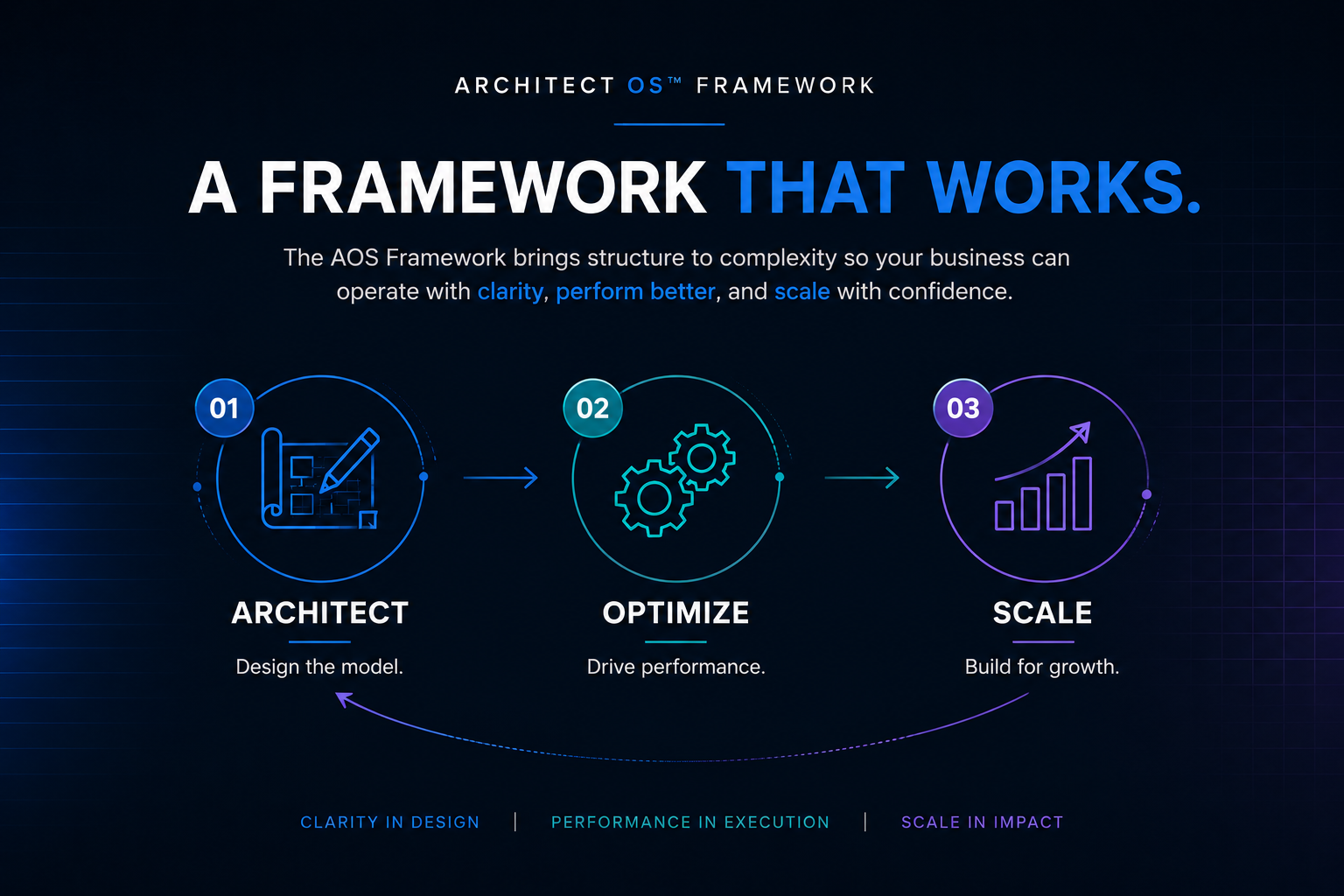
ARCHITECT OS™ is built around a simple operating sequence:
Architect. Optimize. Scale.
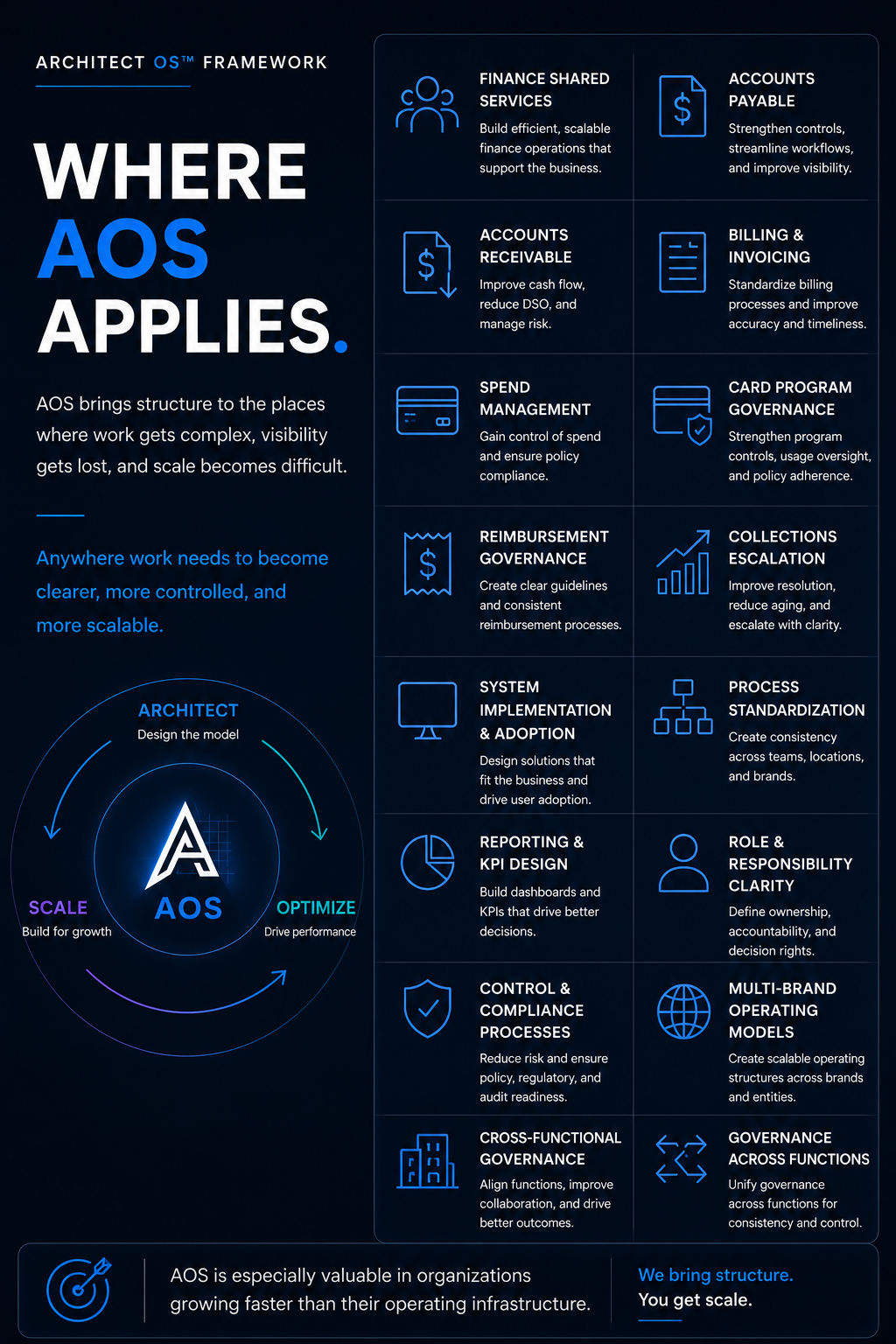
The framework is designed for leaders who need to bring structure to complex work, improve execution, and build systems that can scale across teams, brands, functions, or business units.
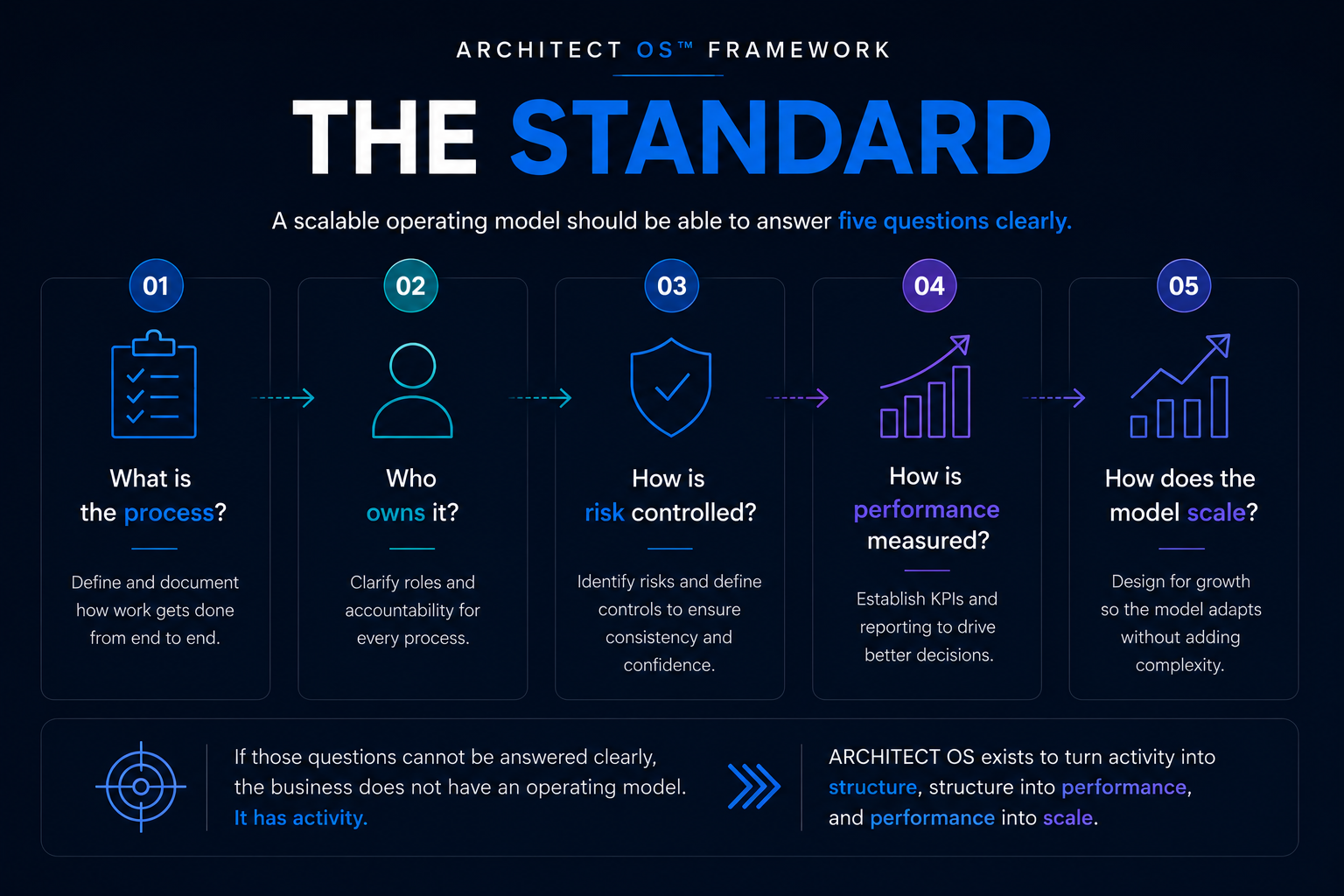
It is not a rigid methodology. It is a practical operating model for turning scattered processes into governed, measurable, repeatable systems.
The goal is clarity, control, and scale.
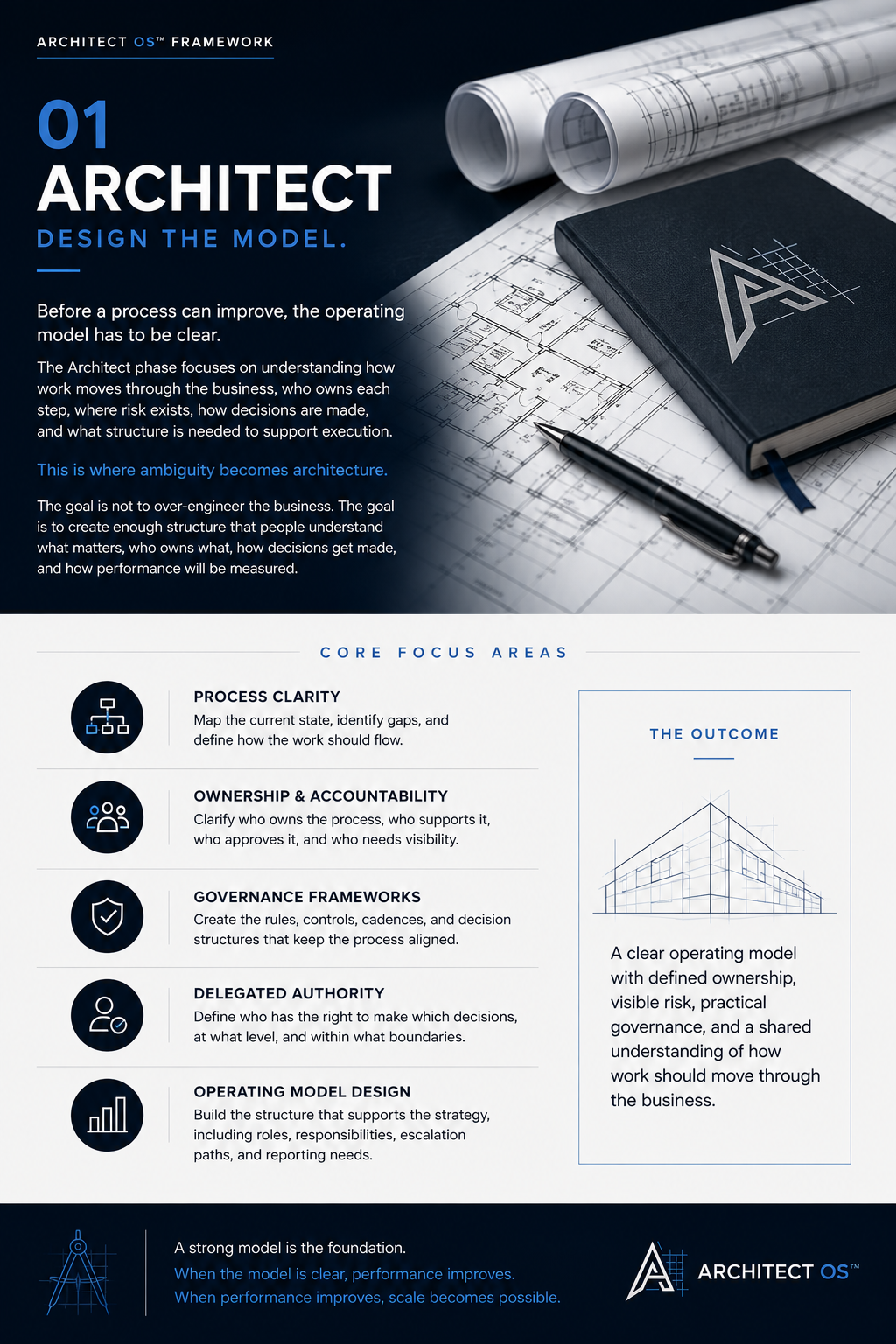
Before a process can improve, the operating model has to be clear.
The Architect phase focuses on understanding how work moves through the business, who owns each step, where risk exists, how decisions are made, and what structure is needed to support execution.
This is where ambiguity becomes architecture.
The goal is not to over-engineer the business. The goal is to create enough structure that people understand what matters, who owns what, how decisions get made, and how performance will be measured.
Core focus areas:
Process clarity
Map the current state, identify gaps, and define how the work should flow.
Ownership and accountability
Clarify who owns the process, who supports it, who approves it, and who needs visibility.
Governance frameworks
Create the rules, controls, cadences, and decision structures that keep the process aligned.
Delegated authority
Define who has the right to make which decisions, at what level, and within what boundaries.
Operating model design
Build the structure that supports the strategy, including roles, responsibilities, escalation paths, and reporting needs.
The outcome:
A clear operating model with defined ownership, visible risk, practical governance, and a shared understanding of how work should move through the business.
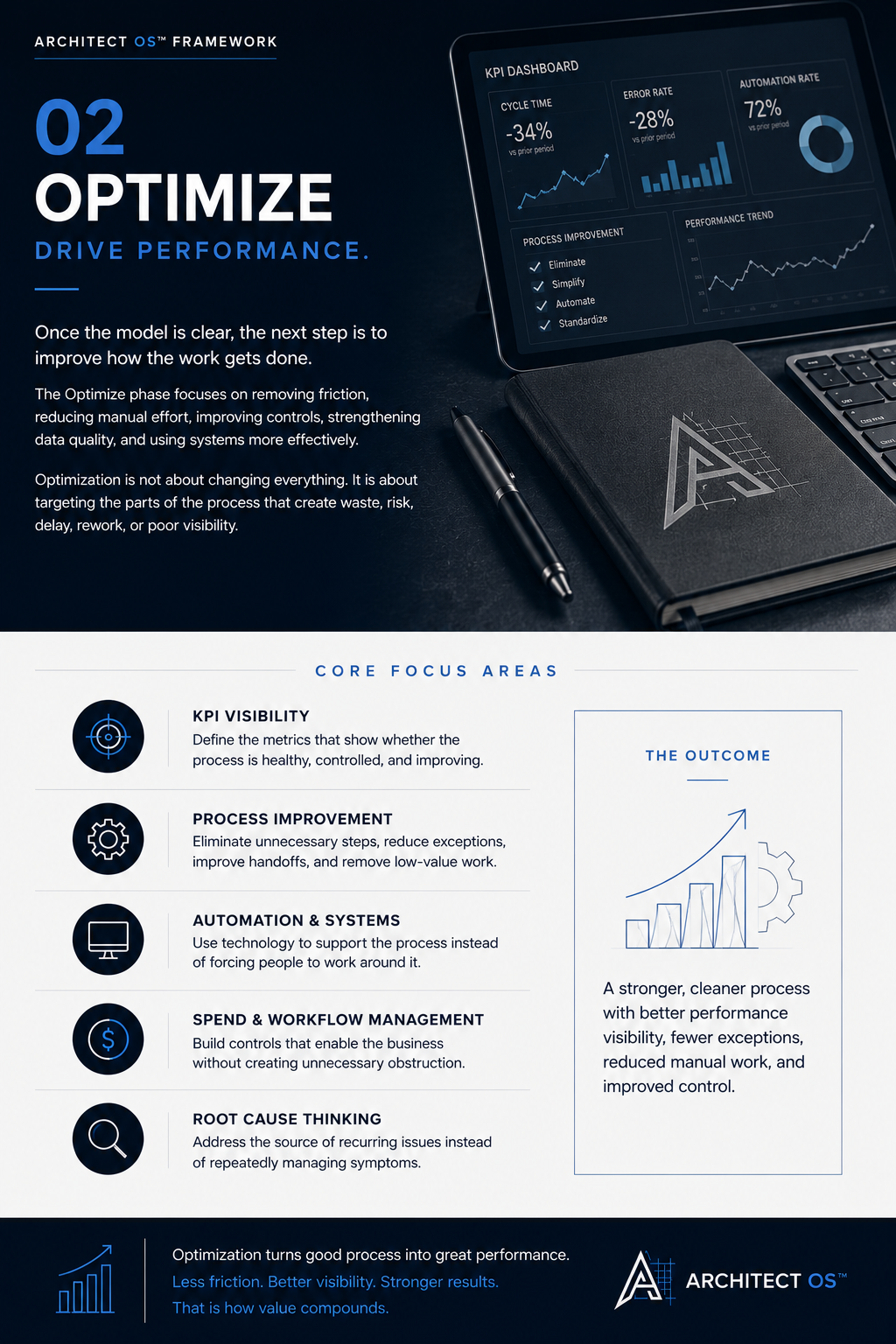
Once the operating model is clear, the next step is to improve how the work gets done.
The Optimize phase focuses on removing friction, reducing manual effort, strengthening controls, improving data quality, and using systems more effectively.
This is where structure becomes performance.
The goal is not to change everything. The goal is to identify the parts of the process that create waste, delay, risk, rework, or poor visibility, then improve them in a targeted and measurable way.
Core focus areas:
KPI visibility
Define the metrics that show whether the process is healthy, controlled, and improving.
Process improvement
Eliminate unnecessary steps, reduce exceptions, improve handoffs, and remove low-value work.
Automation and systems
Use technology to support the process instead of forcing people to work around it.
Spend management
Build controls that enable the business while improving visibility, accountability, and compliance.
Root cause thinking
Address the source of recurring issues instead of repeatedly managing symptoms.
The outcome:
A cleaner, stronger process with better visibility, fewer exceptions, reduced manual work, stronger controls, and measurable performance improvement.
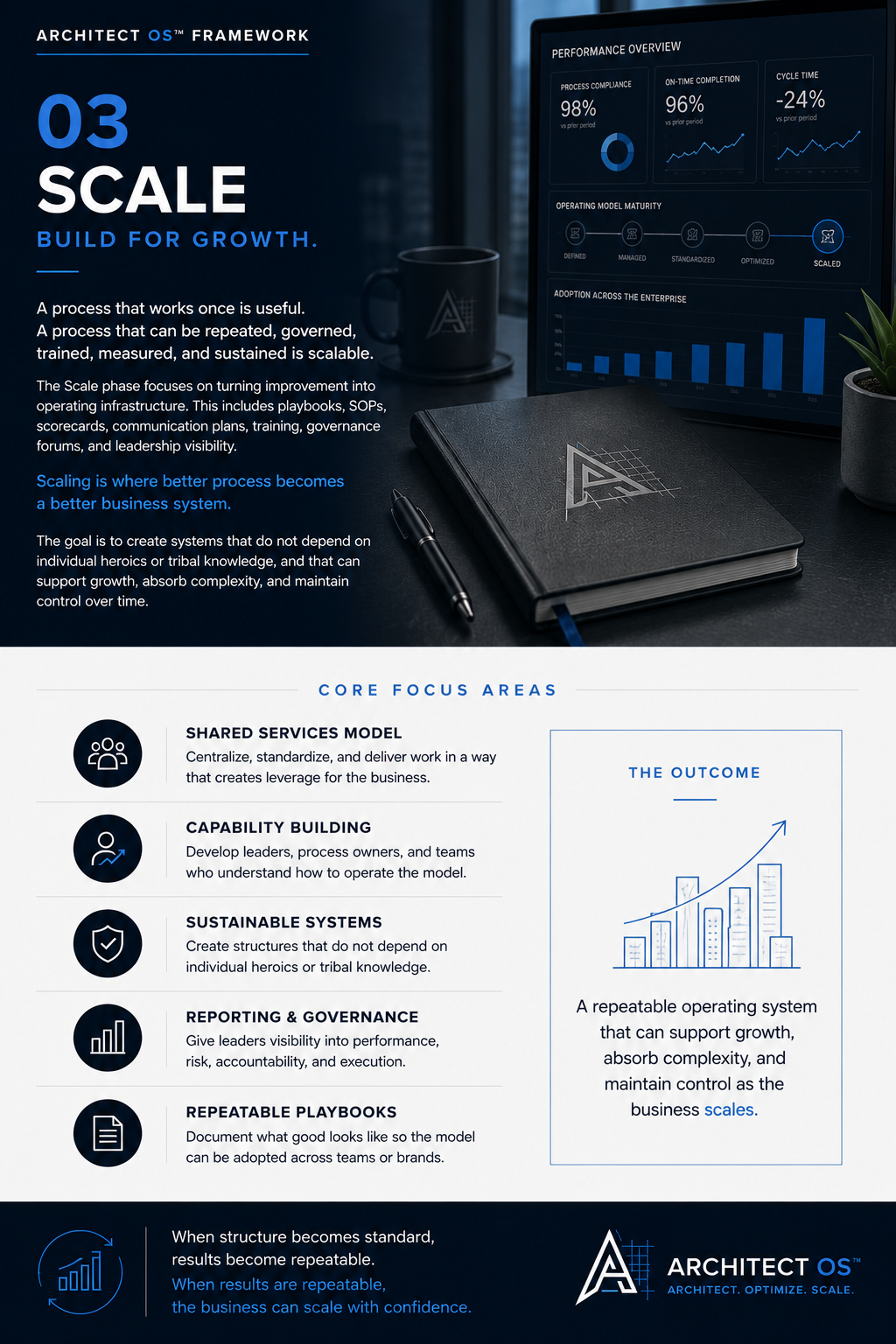
A process that works once is useful. A process that can be repeated, governed, trained, measured, and sustained is scalable.
The Scale phase focuses on turning improvement into operating infrastructure. This includes playbooks, SOPs, training, scorecards, governance forums, communication plans, and leadership visibility.
This is where performance becomes an operating system.
The goal is not to create more documentation for the sake of documentation. The goal is to make the model durable enough to support growth, absorb complexity, and maintain control as the business scales.
Core focus areas:
Shared services model
Centralize, standardize, and deliver work in a way that creates leverage for the business.
Capability building
Develop leaders, process owners, and teams who understand how to operate the model.
Sustainable systems
Create structures that do not depend on individual heroics or tribal knowledge.
Reporting and governance
Give leaders visibility into performance, risk, accountability, and execution.
Repeatable playbooks
Document what good looks like so the model can be adopted across teams, brands, or business units.
The outcome:
A repeatable operating system that supports growth, improves consistency, strengthens accountability, and allows the business to scale with confidence.
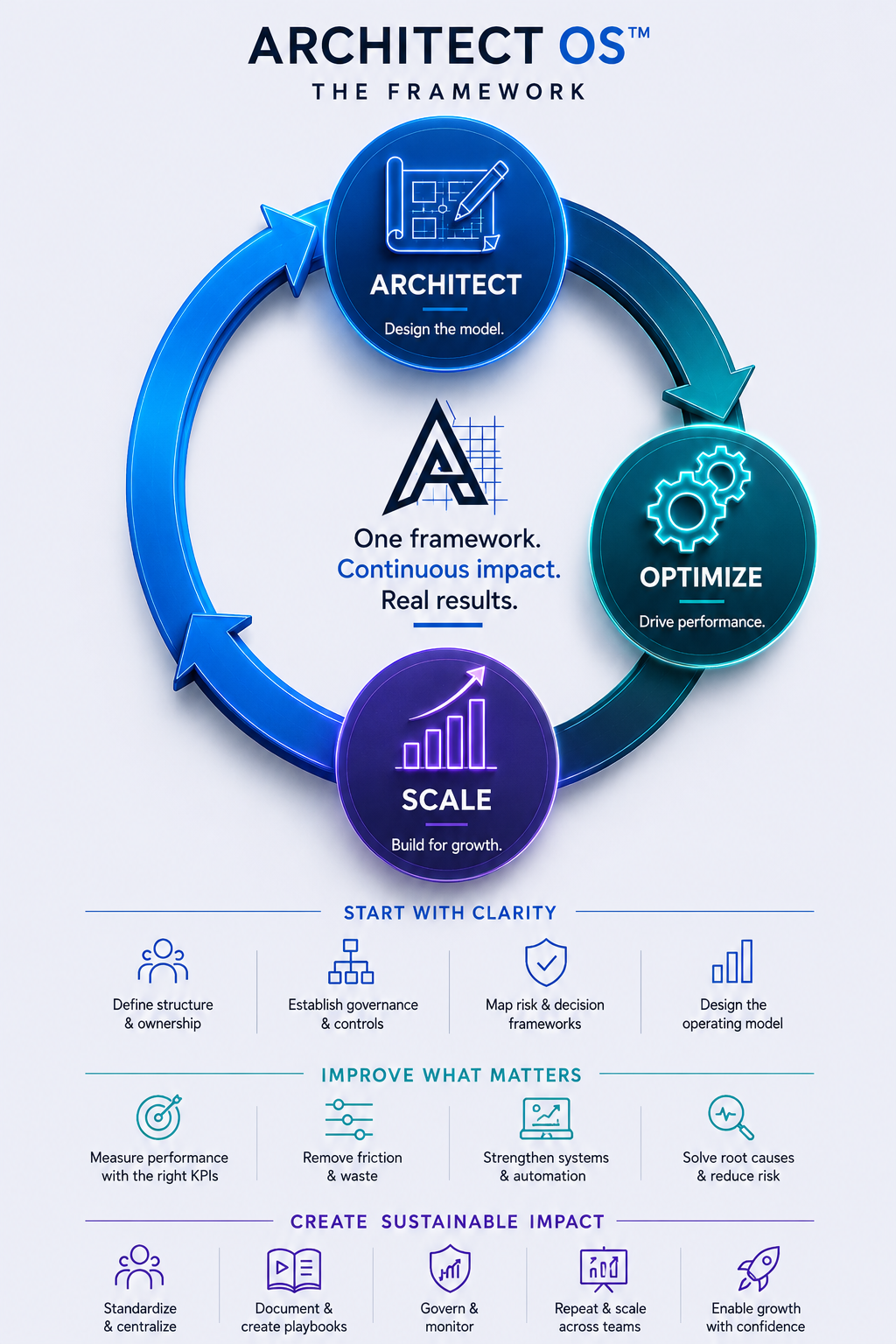
ARCHITECT OS™ is not linear in the sense that work only moves forward once.
In real organizations, the cycle repeats.
You architect the model.
You optimize the work.
You scale what works.
Then growth, complexity, system changes, or business needs expose the next layer of work.
A strong operating system is not static. It evolves with the business.
AOS™ helps leaders continuously assess where the work is breaking down:
Is the issue structural?
Architect the model.
Is the issue performance-related?
Optimize the work.
Is the issue consistency, adoption, or scale?
Scale the system.